Life, liberty, the pursuit of happiness and private property. NZ has stayed still and government still seeks to ban, compel, tax and spend other people's money. Meanwhile war is being waged on capitalism by the left which mistakes central banking monopolies for the free market.
Tuesday, October 31, 2006
The US mid term elections
Greens fisk ignorant UK Labour MP
*
Yes, they are spot on with this. The Greens are writing to the British Greens to make the point that imported dairy and lamb products from New Zealand are better for the environment than ones produced in the UK. I’ll be interested to see the reaction of the British Greens, because it will go against their adolescent girl like simple arguments – local good, foreign baaad. Good for Russel Norman for pointing this out. I’ve been commenting on UK forums about this since the Lincoln University report came out.
*
The Greens will find themselves confronting the UK agricultural lobby, the European Commission and many others who wont want to listen – but it is time to make this point only too clear. In fact, economics isn’t a bad proxy for the environmental impacts. After all, if the UK was efficient at agricultural production, it wouldn’t need a combination of subsidies and protection from imports.
Taxes don't clean the environment
*
PC has some excellent posts on this, one summarising some of the reactions and another being Tim Worstall’s fisking of the report, which is well worth a read. I doubt the journalists for the BBC or the Independent (Britain's leading doom and gloom rag as you can see) will read it.
*
Fortunately there is some commonsense from the Daily Telegraph. In its editorial it makes an excellent point:
“It is a pity that all three main parties have bought into the idea that state regulation is the answer. Market mechanisms have proved highly effective at delivering green goals. Extending property rights to cover air and water quality, and allowing citizens to sue polluters, is a surer way of securing a clean environment than relying on government inspectors. Privatising rainforests gives owners an immediate stake in their protection. Treating endangered species as the property of those on whose land they roam encourages locals to treat them as a renewable resource.”
Funnily enough this is exactly the sort of policies Libertarianz have been talking about for years.
*
You see the problem with the Stern report is that its apocalyptic vision appeals to two political instincts.
*
The left loves it because it “proves” how bad business is, how bad individualism is (reflected in the private car and tourism – ignoring that in London, for example, 70% of greenhouse gas emissions come from buildings). It means it can rally support around the need for “central action” by the state, and that the problem is because “nobody did anything” and that if people are left to their own devices the world will come to an end. Have no doubt about it – the central thesis behind this view is that individual choice is the problem. People make choices that are bad for other people, and they must be regulated, compelled, taxed or subsidised to make good choices. In short, the left thinks this proves that the free market doesn’t work.
The element on the right which likes Armageddon comes from what can best be described as a protestant guilt ethic about “living” and how the government has a role in helping you be good. It is a similar moralistic bent as the left, but from a different angle. “You can’t possibly leave people to do as they wish, they don’t know what’s good for them”. It is the same ethic that likes restricting alcohol, drugs and censoring “naughty films”. It is almost a school prefect approach which says patronisingly that the masses don’t really know what is good for them, we do and why don’t we be good chaps and realise our businesses really need to go along with it – “take one for the team”.
*
Both are insidious and wrong. The free market works but does not operate, in particular, to address pollution because property rights are limited. Assume for now that there is a climate change problem propagated by growth in greenhouse gas emissions (I’m sceptical but let’s err on the side of caution). The sectors which are the biggest contributors to this are energy, transport and agriculture. All of these are subject to enormous levels of government interference.
*
The energy sector in most countries is government owned and/or regulated. On the one hand governments have assisted and subsidised the development and operation of electricity generation, oil exploration, coal mines, on the other government’s regulate energy prices so that power companies, oil companies and the like can’t charge too much. Yet, somehow, people are using too much energy!!! Take some measures that are no doubt economically efficient and environmentally positive (as a spinoff), like Thatcher closing the UK’s inefficient coal mines. The left opposed this vigorously, but subsidising a very dirty source of energy is hardly good for the environment is it? Another is subsidies for energy use by people on low incomes or capping electricity charges – this underprices energy use, and keeps consumption high, so why not get out of the way and let energy companies charge as they see fit. The price might go up (or down) and they would then have money they may invest in future technologies to produce energy more efficiently – and energy conservation would become more worthwhile as people seek ways to save on energy bills.
*
That’s energy. Transport is worse, as roads are run with Soviet-style central planning with the idea of pricing road use being alien to all, except those wanting to do so to penalise driving. Governments subsidise some transport modes and tax others, with little regard for the effects. Agriculture is also particularly bad, partially because energy and transport to rural areas is subsidised, but mainly because the European Union, Japan and the USA prop up inefficient producers.
*
Would removing government interference in those areas and instituting property rights in water and airspace be enough to "address the economic cost of climate change"? Maybe. Maybe not. However it is clear that such measures would help by removing enormous economic distortions that mean that economic choices are poor – and resources poorly allocated as a result. That is the main benefit, a secondary benefit is that by reducing waste, it reduces negative environmental impact.
*
However, you wont hear that solution from Blair, Cameron, Clark, Al Gore or Nick Smith. You’ll hear about subsidies for “clean energy” and public transport, you’ll hear about taxes on driving, flying and “dirty energy”, in other words you’ll hear about the state taking more of your money and giving it to others. It wont be about you making better choices, it will be about central planners doing it. The image will be of a tax being a punishment for you being bad, and that you paying the tax “makes things all better”. It doesn’t – it just gives the government your money to play with – that tax doesn’t “plant a tree” or “suck up the pollution” you caused. It is money to pay a bureaucrat’s salary, to subsidise a business or individual.
Sunday, October 29, 2006
UK goes into armageddon mode
*
- You’d hope there might be some informed debate about whether this prediction is realistic?
- You’d hope someone would ask whether £184 billion would be better spent on improving people’s lives in other ways (take the Bjorn Lomborg proposal that clean water would do more for the world's poor than tackling climate change)?
- You’d hope someone would say, even if this IS correct, there is little point the UK acting alone when it is responsible for under 2% of greenhouse gases (though shutting down completely would make a difference), so why cripple your economy until you’ve convinced China, India and the US to do the same?
*
No – almost all of the media has presented one view, a sheepish following of the report.
*
UK Environment Minister David Milliband has hopped on the bandwagon proposing new taxes such as:
- Annual rises in fuel tax;
- Taxes on incandescent light bulbs;
- Taxes on flights to EU countries.
*
The fuel tax proposal is particularly cheeky, saying that if oil prices drop then fuel tax should increase to make up the difference!! So if oil is plentiful and cheap, the UK will pay more and more in tax. None of the proposals have any assessment as to the net effect on the economy, on the environment and on demand for air travel, driving etc. It is, essentially, a left wing manifesto of ecological taxation.
*
So what does Her Majesty's loyal opposition say? The BBC reports David Cameron AGREES and so do the Lib Dems. Wonderful! So no debate on such a radical issue. Not even questioning why the UK should tax itself silly in a way that makes no difference at all to climate change. It is like stopping one person pissing in the pool while the others continue unabated.
Thieving bastards have conference
*
How absolutely fucking convenient. The incumbent government – naturally – does best. The NZ Herald quotes Dr Cullen paraphrasing him saying:
*
Labour sought a political system that was inclusive and open and could not be "simply bought and sold by the rich and powerful".
He added: "And that cannot be achieved without the state providing support to the process of democracy itself."
*
Inclusive and open? So all parties get the same funding? No. Bought and sold by the rich and powerful? Oh so forcing people to pay for it, and using taxpayer’s money to pay for your campaign isn’t being powerful? The state providing support – as if it is some benign independent body, rather than something Labour controls.
*
Andrew Little’s attempt for Labour to admit it had broken the law and move on failed to get support – the little piggies have their snouts in the trough so much they can’t see outside it for the muck that sticks to them. Red party good, blue party baaahdd.
*
This is an absolute outrage for several very important reasons:
*
1. It is blatant discrimination against small or new parties. In short, it is Labour’s way of using your money to give it an advantage over any future Alliance, Green Party, Maori Party, United Future, NZ First, ACT, Libertarianz, Destiny NZ etc etc. If you believe a liberal democracy means that the incumbents shouldn’t be subsidised over new entrants then this alone is a reason to be outraged. Imagine if in the private sector an incumbent company could use taxpayer’s money to subsidise its advertising campaign against a new competitor – that is what this is.
*
2. It is morally unconscionable to force any New Zealanders to pay for political parties, which are voluntary associations with voluntary membership. Most New Zealanders have no interest in funding political parties, forcing them to fund everyone from the Greens to Destiny NZ to the thieving Labour Party to ACT to the Maori Party and NZ First is immoral. The argument that funds will be divided according to the vote at a previous election is ridiculous – that means that everyone is funding everyone. It means Asian immigrants fund NZ First, it means gay couples fund United Future, it means exclusive Brethren fund Labour, it means union leaders fund National. I don’t want to be forced to fund organisations I don’t believe in, I am sure neither do you (unless the one to benefit the most is the one you support).
*
3. It is about replacing voluntary funding of political campaigns. Labour opposes any individuals or groups running their own campaigns to support political parties – this is because not enough people with enough money want to fund Labour. Like any organisation that can’t get enough money, it is unhappy. I know this only too well myself. However, Labour isn’t just unhappy that not enough people want to fund its campaign (ungrateful sods after all that money we have used in government to support lots of causes), it is that more people want to pay more money to Labour’s opponents. Like spoilt little brats who find themselves no longer the favoured child, Labour members are having a hissy fit – instead of trying harder to convince people and businesses why funding the Labour party is a good idea (don’t ask me why it might be), Labour has decided to promote force. Only this time it is force to STOP people spending their money campaigning. As David Farrar says this may be one of the most serious challenges to free speech in recent times. Not content with banning you from spending your own money on TV and radio advertising on a political campaign, Labour wants to stop you spending it at ALL. So that’s it – free speech gone – just go away, don’t you DARE think of opposing the government – your taxes have paid for bureaucrats to decide who gets what for campaigning.
*
So there you have it. If Labour introduces legislation to change electoral funding in advance of the election it will be an absolute travesty. Labour did not campaign with this policy and was not elected to implement such a radical change in our liberal democracy. Remembering it spent taxpayer’s money illegally to campaign, more than any other party by a long shot (and NOTHING they can throw about regarding National’s GST faux pas can take away from that), so it is fortunate to still be in power because Winston Peters and Peter Dunne have their snouts in the Labour trough keeping them there.
Labour Christian

Is man one of God's blunders? Or is God one of man's blunders? (so said Nietzsche) well I don’t really care, since I’m an atheist. So why does Labour care? Well according to Stuff David Cun*liffe seems to think Labour can reclaim a moral dimension that Christianity contains that he thinks belongs on the left.
*
Well, I don’t think much of Christian morality – it is a religion largely dedicated to the worshipping of self sacrifice and the glorification of the god promoted stringing up of his son like a carcass, for everyone else.
*
Nevertheless, given what a prick Cun*liffe is, the more he dedicates himself to self-sacrifice the happier I’ll be.
Saturday, October 28, 2006
Conscience votes - should list MPs be able to vote?
Well let’s consider the philosophy behind MMP. It is a system designed to provide a combination of fair local representation (electorates) with MPs who are meant to represent the views of their electorates, and provide fair national representation to enable governments to be formed based upon the notional support of (more often than not) around 50% or more of voters. The list MPs explicitly represent parties and the platform that parties present to the voting public for their list votes. List MPs cannot be voted out of Parliament explicitly – only by voters rejecting the party, which means it is an all or nothing vote for a policy platform. List MPs ought not to do more than represent the party manifesto. People did not vote for them, they voted for the party.
This works all very well when we are talking about legislation when parties have policies. Labour says yes, National says no, the others say yes or no etc etc. Conscience votes are another matter. If you were asking what party to support on a range of conscience matters you might be disappointed, especially in the two main parties where a spectrum of views tends to be represented on these matters. So is a tick for Labour that gets Ashraf Choudhary in Parliament or a tick for National to get Pansy Wong really meaning you want her to represent you on conscience votes? Maybe, maybe not.
More importantly, given that the electorate vote is so typically devalued in forming governments (it is most highly valued by the four minor parties dependent on winning certain electorates to get into Parliament), should it not be recognised as being the representation of the views of the local community on conscience votes? Marian Hobbs can legitimately claim to represent the views of Wellington Central voters on conscience matters and I am betting that, most of the time, she would be. Other electorate MPs may or may not be, but frankly those MPs are best placed to poll constituents. Many electorate MPs DO poll constituents on conscience issues - list MPs have no constituency to poll, and if they did it would double count the views of the electorate MPs. So if only electorate MPs could vote on conscience issues this could mean that the electorate vote would be seen by voters as a choice for the individual who best represented your views as a resident of an electorate, rather than choosing the party for government.
So, what I am proposing is that list MPs have no right to vote in Parliament on conscience matters, unless the party concerned has a unified position and will vote as such (which presumably includes the electorate MPs which not only represent their constituencies but also supplant list MPs in the first instance as a proportion of that party’s seats in Parliament). If it is not part of a party’s policy platform (in which case it is reasonable to expect all of the party’s MPs to vote identically and that the list vote DOES represent the views of voters who can endorse or reject the platform), then it should not be the party list MPs making a call – because they would be making a call on an issue they were not elected to represent and for which they cannot be held individually accountable.
So what would this do? For starters, it would energise parties to develop policy responses to conscience votes because many of their MPs would want to participate. Green and NZ First MPs under the current parliament would have no votes on a conscience issue unless they had formulated a consistent policy (as they have no electorate MPs). The Greens typically do have views on these sorts of things, so they would be ok.
You can see it being seen as unfair that electorate MPs get to vote on conscience matters, and more often than not it is Labour and National list MPs that can’t (because neither major party is prepared to adopt policy one way or the other on the drinking age or smacking or prostitution or civil unions etc), but the Green and ACT list MPs can because both parties have a policy on the drinking age (presumably, though I never knew ACT did). For starters, most electorate MPs will be Labour or National anyway. However it also pressures all parties to start thinking philosophically about all issues in front of Parliament, and if they can’t it is left to those best able to represent the views of voters – electorate MPs. Does it mean that if I say voted Marian Hobbs as my electorate MP and Greens for the party list that I get two bites on a conscience issue in Parliament? It sure does (and you don’t need to ask to think I’d vote like a masochistic lunatic). It also means that the Greens, ACT and any other parties with policies on conscience matters actually get a higher profile, because voters who care about these issues may prefer to vote for them than National or Labour.
Which of course, is the primary reason it will go nowhere. National and Labour have everything to lose from this idea. Nevertheless, is it worth thinking about?
London's bus route from hell - C11
*
It was operated by a local company Thorpes, which you notice because half the buses haven’t been repainted in the colours of the new owner – Metroline – but there is no indication that Metroline has done anything to improve service. Besides the delays (which are somewhat not up to the operator, London is hell to drive around), there are many problems.
*
It’s not just the pokey little buses that have few bell buttons (so if you are standing or not seated in the right spot you have to get up and walk through the other passengers to get at it). These buses are small single deck, cheap and uncomfortable.
*
It is the rude scum of the earth who ride on it and the drivers. I mean it – the world would be a better place if around a quarter of the people who ride this bus were eradicated and about a quarter of the drivers (see I am nice!)
*
I’ve had the driver who kept packing in people on the bus even though there was little room. Didn’t matter, after all we are human freight. The driver who wont tell kids to stop being loud and obnoxious while they don’t give up seats to the elderly. The driver who drives right past your stop, well after you pushed the bell and then says “you didn’t push it, I can’t pull over” when there is no traffic and then says “oh well get off at the next stop”, ignoring my elderly mother who then would have to walk a further 100 metres and a pensioner who also wanted the same stop. The driver whose driving caused a child to fall over and hit her head. and wouldn’t pull over to let the parent and child get out. In other words, the drivers show a level of service that I’d have expected in Tirana in the 1980s. There is not the slightest level of interest in the passengers being comfortable, safe or even valued – frankly, many drivers would happily drive empty buses back and forth (given the bus companies get paid a subsidy independent of the number of passenger that ride it, I wouldn’t be surprised). Driving fast and furious and braking suddenly, why should they give a fuck? Demand for bus drivers in London outstrips supply, clearly because there are plenty of useless fucks living in London and anyone who is any good is snapped up quick.
*
There must be good drivers, I assume they work at the crack of dawn, when the passengers are few and better quality (sleeping off their booze, crack, pot and late night watching quiz tv).
*
Most of the drivers have the personality of a rock – the buses may as well be remote controlled. Stagecoach Wellington drivers are truly people to be grateful for – I can see why drivers don’t ever get thanked by passengers leaving.
*
Then the passengers. Besides the handful of brave pensioners and others who live in Belsize Park, Hampstead and the like using it because it is raining or to short cut a trip to Waitrose, this route goes from Brent Cross to Archway, through some of the direst estates in Camden Borough. From these estates yes you get people on low incomes, they in themselves are not a problem, it is the subset of space wasters that are the problem. The subset are:
*
- Obnoxious chavvy kids and teenagers. They are travelling for nothing (thanks to red Ken Livingstone’s socialist mayoralty). Besides being stupid and rude, they are just oxygen thieves when they occupy seats while pensioners stand, take up lots of seats and don’t move when they are in people’s way. They all need boot camp and if that fails castration to stop them producing more space wasting scum. Britain’s first problem is putting up with these shits – other cultures would threaten them with violence and treat them with disdain, in the UK the kids have knives and everyone is scared (legitimately) of going to court for hurting the poor parasitical fuckers.
- Unhygienic people. The ones who stink of urine, faeces, pick their noses and eat it and other practices that are too revolting to mention. I’m sorry, people who are that revolting need someone looking after them and they shouldn’t be out on their own. This is Britain’s second problem, people are too fucking polite to say “hey nose picker, fucking do it somewhere else you revolting creep”.
- Thieves. Pickpockets, need I say more. Not enough prisons to lock them up, being tough on crime would help reduce traffic congestion.
- Other rude scum. The ones who sit while pensioners stand, who sit in the aisle seat while the window is empty. The ones who stand in the aisle blocking people from getting on because they are talking to their mate and wont move out of the way.
*
I do have a solution for this. The Metroline bus franchise should be terminated. The route should be open for a commercial operator who can charge commercially viable fares – which will mean no free fares for the young and the underclass of the filthy and rude will be less likely to afford to catch it. Disadvantages people? Does it bollocks! It means they might get off their arses and walk, the distances aren’t that far and the most obese country in Europe needs it.
*
Meanwhile, I’m following my own advice. I have a large umbrella, I can walk the distance I use this bus in 20 minutes.
Friday, October 27, 2006
Big Sister Cindy "Stalin" Kiro supported by Stalinist Sue
Nicaragua looks to ban all abortions
Two weeks before the Nicaraguan presidential elections and the Nicaraguan Parliament has passed a Bill that will ban all abortions, including those in cases of rape or when a woman facing dying during birth. The Roman Catholic Church, ever the force for progress, transparency and secretly fucking the bejesus out of its congregation behind their back, promoted the bill, along with the (get this) liberal party.
*
Many Sandinistas also supported it, allegedly out of fear that opposing it would mean they could lose the upcoming presidential elections. This indicates firstly how strong the anti-abortion view holds in Nicaragua, but secondly how inherently intellectually corrupt and power hungry the Sandinistas are. Helen Clark picked coffee beans to support them in their youth – I doubt that she’ll be proud of the Sandinistas now.
*
I don’t doubt the Roman Catholic Church wont worry about one of the effects of this Bill, assuming it isn’t vetoed by the President (who supports it). The Daily Telegraph reports:
*
Hundreds of demonstrators gathered outside the building during the week in Nicaragua’s capital Managua, warning that the measure would effectively mean a death sentence for as many as 400 women who have ectopic pregnancies every year.
The value of a woman’s life in Nicaragua is low – and I value those lives over the potential lives of embryos anyday. The Roman Catholic Church, essentially an international gang (which covers up the crimes of its members) deserves condemnation over this. Oh and don't think that because Daniel Ortega and the Sandinistas oppose this (they are the poster childs of the left) that they are any good. Given their forcible evacuation of 8500 indigenous people from their land including the murder of 34 of them in the early 1980s. More recently, journalist Carlos Guadamuz was murdered for his reporting critical of Ortega. The real conclusion is that there isn't a lot positive about Nicaraguan politics - on either side of the fence.
Madonna and child

All the hoo ha about this shows how fascinated so many people are with the ephemeral and the cult of celebrity.
*
The important questions
*
1. Has Madonna used or threatened force to adopt the child? No.
2. Has anyone used or threatened force against Madonna to compel her to adopt the child? No.
3. Is Madonna likely to abuse the child (physically, sexually, neglect)? No.
4. Is the child likely to be better off, overall, if he is adopted by Madonna or not? Almost certainly yes.
5. Has Madonna paid for the child? Unclear. If so, it raises issues about the ethics of parents selling children to all and sundry, including the unscrupulous.
*
Interesting but not important questions
*
1. Has Madonna bribed any of the Malawian authorities in order to get around laws regarding adoption of the child? Probably not.
2. Has Madonna sold the rights to the story around the child for considerable sums of money? Possibly.
3. Has the father lied about whether or not permission was given for the adoption? Possibly.
*
Irrelevant questions
*
1. Are there better ways for Madonna to support children living in poverty in Africa? Yes, how much time do you have? Though she appears to be doing more than adopt a child, she seems to have sponsored an charity for orphans to the tune of US$1 million.
2. Is Madonna simply publicity seeking? No, not just publicity seeking.
3. Is Madonna a rather vapid simple headed image conscious entertainer with childlike political views and a big concern for her own guilt about her own ample wealth, when she sees poverty? Absolutely.
4. Does she want to make the rest of the world feel guilty too? Yes.
*
So there you have it. I don’t like Madonna, I don’t think she is extraordinarily talented, interesting, intelligent or attractive. She is a good entertainer, and good at shocking people (hardly a great talent, but many Americans seem easier to shock), but her politics are at best naïve, childlike and braindead, at worst counterproductive and quite despicable. She doesn’t believe terrorism is a big threat, but hey she doesn’t use the tube or buses, she is one pinup example of the stupid leftwing celebrity. The "I'm a rich celebrity aren't I good adopting a poor African child" nonsense has a bad smell around it of someone desperately seeking approval for more than singing, hip grinding and insulting George Bush.
*
However, she does have a right to adopt the child, and it is most likely to be in the child’s interests – and nobody but the child’s parents have the right to say no. Non-governmental organisations should get out of the way and leave it well alone. There are good reasons to respond to Madonna's publicity by suggesting she could do more good doing other things, but that is not a reason to stop the adoption - it is frankly only the business of her, her husband and the child's family.
Thursday, October 26, 2006
Yawning with the Tories

*
Now the Conservatives for most of the post war period have been just that – conservative. Doing, by and large, very little to roll back the tide of socialism that swept Britain from 1945. The exception was the Thatcher era, when the state leviathan was being operated out, parts privatised, parts shut down, regulations removed and socialism was being wound back – and boy did they wail, scream and gnash teeth. However, it did mean that Labour had to become closer to Thatcher to win power. New Labour accepted the economic reforms and even has accepted the need for private investment in education and healthcare, and business like disciplines on publicly provided services – but it is also the representative of insipid petty fascism.
*
The Conservatives have been hamstrung largely due to inept leadership, unwillingness to be bold on policy and unwillingness to engage philosophically on what they stand for. They have stood for tax cuts without saying why it is moral and why it is affordable. They have been anti-immigration almost to the point of obsession and have not looked like a government in waiting, until recently.
*
Sadly that government in waiting looks a lot like the current one, with the political correctness about candidate selection, unwillingness to talk about tax cuts and talking about new taxes on aviation (ohhhh maybe not), road transport and encouraging recycling. The Conservative Party under David Cameron is far removed from the Institute of Economic Affairs and Adam Smith Institute in terms of policy – it is, at best, a more radical version of Tony Blair. It is not Thatcherism part two.
*
Now the Conservatives DID need a makeover, a makeover that got rid of nonsense old-fashioned bigotry that saw the party being seen (with some truth) as treating women and ethnic minorities as good for baking cakes and doing the cleaning. The homophobia that was only matched by the regular disclosure that some Tory MP had been discovered in a dress and heels tied upside down while a woman in leather calls him a naughty girl, or the like. The Tories needed to be brought into the 21st century and be reminded that being liberal on individual freedom is important. At best this has been sidestepped, although it would appear they are less hung up about sex, drugs and censorship.
*
So what have they done? Well, week after week it appears they have adopted style over substance, partly by surrendering to the arguments on the left on tax cuts and deciding to be the “green” party of the UK.
*
Tory leader David Cameron is calling for a Climate Change Bill to be introduced to Parliament. Why? The proposed Bill would set up a bureaucracy to set a statutory binding target (on who you may ask? Blank out – never mind) which it will report on annually. So, in other words, more bureaucracy to report on the UK meeting carbon emission reduction targets. So setting aside whether man-made global warming is real, setting aside whether it is practicable to reduce the UK’s contribution to this when the developing world is doing virtually nothing, setting aside whether it is economically efficient and a good use of the property of UK citizens and companies to spend money on reducing their contribution to climate change (it may be better to improve education standards, lock away more louts or give people big tax cuts), (so there are at least three arguments to be made about how damned blind this idea is), this stupid bill assumes the only way man-made climate change can be eased is by reducing CO2 emissions. It ignores other emissions of “greenhouse gases” and ignores planting greenery to offset that. Stupid Conservatives, really really stupid. They talk about investing in high speed trains. Why? Is it better to subsidise how people move about than to give them back their money and face the full cost of transport? Why not stop running the roads like a Soviet style bureaucracy which is a cash cow and constantly begging for maintenance funds, while congestion gets steadily worse?
*
The Conservatives have bitten the “saving energy is good” nonsense, when it is clear it makes such a small difference to people’s lives that they can’t be arsed doing it, and this assumes they pay the commercial cost of supplying energy (which, by and large, is true). Beyond that, saving energy is like some wartime conservation measure – austerity for the sake of it, or worse yet “Head Prefect David Cameron” telling you that you “ought to switch off the standby on your TV” for your own good. They even have their own website where you can check how environmentally friendly your car is and more on a Quality of Life Challenge website talking further about how the government “should be doing things” so you don’t hurt the environment more. Comments like this “The fundamental value of being able to produce our own food and other commodities, including bioenergy, has inexplicably been ignored by Government.” tell me a lot. Mr Cameron, your own food production is highly subsidised from Brussels, so people don’t actually pay this “fundamental value”. *vomit*
*
The Tories are vapid about the NHS, with weasel words about cutbacks and funding going straight to GPs instead of “through bureaucrats”. Nothing about raising serious questions about a system that has unlimited demands put upon it while everything is free, or about the use of the private sector.
*
So what about tax? Well last week a Tory thinktank, the Tax Reform Commission came out with a report (pdf) calling for major cuts in taxes, including increases the tax free income threshold to £7285 per annum (are you listening Dr Brash?), eliminating the bottom tax rate of 10% (as it would no longer be needed) and reducing the basic 22% rate of income tax to 20%, decent cuts in corporate tax (to 25%) , abolish inheritance tax, a load of tax credits (which give special privileges to some not others) and general simplify the tax system. Frankly, it looks like the National Party in NZ wouldn’t be frightened by it, ACT would think it was timid, I think it is, at best, a good first step. To show you how timid it is, the report even said that flat taxes could not be introduced in the UK yet because of the sheer size of its state sector – which tells you how bad it is here.
*
So what was the Tory response? Shadow Chancellor George Osborne wasn't too interested:
"stressing again that economic stability come before promises of tax cuts. He made it clear that the report is not a blueprint for the Party's next election manifesto.”
*
Essentially tax cuts can’t come at the cost of “cutting public services”, ignoring the dynamic effect of lower taxes on economic growth (and tax revenue) and that so much UK public spending is wasteful. They have surrendered the debate to the likes of the BBC, Guardian and the Independent.
*
This is clear in his statement that:
*
"We are not going to commit to £21 billion of unfunded tax cuts now or in the future."However, we will rebalance our tax system and shift the burden from taxing families and jobs to taxing pollution and carbon emissions. I want to tax the bad not the good."
*
Apparently there is no waste in the system, but wait… now they support pollution taxes. Why? What evidence is there that this will deliver any benefits to the UK?
*
So the Tories aren’t supporting tax cuts because of them being “unfunded” as if they have to take money off of someone to give you your money back – when in fact it is your money in the first place. The news is this, they are affordable now – they are more affordable when you cut state spending and subsidies, and represents 1.5% of GDP, when growth is expected to be at 3.5%. In other words this modest step can be afforded by not GROWING spending as much as in the past. The argument that they will hurt public services can be tackled easily by quoting this, but Cameron isn’t even interested in the debate. The cuts would largely benefit people on low to middle incomes, but he isn’t interested in that debate, he wont dare confront the media on this.
*
The Tories are no longer the party of less government, but the party of more, but different government.
*
The thing is though, it is working with the public. The British public love vapid youthful nothingness. The Conservatives are on 39% in the latest Guardian/ICM poll, Labour on 29% and the Illiberal Demagogues on 22%. However, I think the public would notice little difference with a Tory government – there may be a little less political correctness and little more fiscal prudence, but otherwise you could have woken up and thought New Labour had merely gone a bit further to the right than you expected.
Tutu criticises South Africa
Wednesday, October 25, 2006
Drinking age nonsense

*
Only ACT and the Greens are consistently opposing this ridiculous kneejerk reaction – the sort of bill dreamt up by talkback listeners, but actually dreamt up by a failed MP – Castro loving Matt Robson, who lost his seat with the drop in votes for the so-called “Progressive” Party in 2005. The Progressive Party is about as Progressive as the dark ages – the dying remnants of conservative protestant socialism that redistributes to the poor and tells them not to be naughty – the Salvation Army must love the Progressive Party.
*
Wowserism, on a grand scale. The petty narrow minded joyless protestant view of life seen through the eyes of politicians, all thinking they know what is best for young adults. These are the people who react simply to their electorate’s concerns about the minority of young people abusing alcohol by “passing a law”. You can almost hear their knuckles dragging as they vote for it.
*
The Drug Foundation and ALAC, both state funded organisations, are naturally supporting this – since their whole raison d’etre is to support any reduction in supply of alcohol. The message they all want to promote is “alcohol is bad” and wow, that message works when the people voting for it have access to a subsidised bar within the building in which they work.
*
The hypocrisy is incredible. You see socialist Nanny Statists, who don’t like people making money from alcohol (Martin Gallagher) and conservative Christian naysayers who don’t like people having too much fun (Gordon Copeland), deciding it is moral to arrest 18 year olds for attempting to purchase a drink they can consume at will.
*
The same Parliament that wants to prohibit irresponsibility, subsidises it on a grand scale every year through welfare.
Tuesday, October 24, 2006
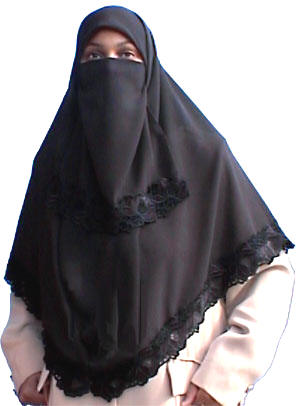
Niqab, Islam and civilisation

*
However it does not mean that there is a right to wear it on any elses property, including at work, school or in a shop that is not yours. As a property owner I have every right to establish a dress code, and dress codes are common in workplaces, bars and aeroplanes among others.
*
So the current debate in the UK about the niqab should not be about having that choice – and few would deny that. It should be about what that choice means, which is not a matter for the state but a matter for society and culture. In other words, it is about declaring that the niqab is, as the Ayn Rand Institute states, “a demeaning, barbaric article of clothing that inculcates shame in women, depriving them of individuality and femininity."
*
Some feminists say it is wrong to tell women what they should or should not wear. Well it is wrong if you only tell women (not men) or advocate that the state should say. Freedom includes the choice to cover up, but the whole basis of the niqab is that women should be ashamed of their bodies and faces, and not only should they cover those parts of the body that men (remember lesbians and homosexuals are non persons in Islamic culture) typically find attractive, but faces – one of the key indicators of human identity.
*
Does it mean that one should harass women who wear the niqab? No. People have the right to wear what they wish without feeling threatened, but others also have the right to prohibit people wearing them on their property or to express disquiet and their own discomfort with women who would rather remain anonymous in public.
*
Let’s not forget what in Islam promotes the niqab. It is a misogynistic, homophobic, shame ridden view of humanity that depicts women as only having identity in relation to their husbands, sons and fathers. Women's success in Islam is only if they can hide their femininity, as if they will be judged as sex objects first and minds and hearts second. Feminists may sympathise with this, but it is more than that. It is the vapid notion that if a man sees a women's face, he will get an erection and be unable to control his "natural urges" and is distracted, and this is wrong. What utter nonsense. What an insult to women to say that the solution is for THEM to cover up, as if they are titillating prostitutes "asking for it" and what an insult to men to say they are judge knuckle dragging cavemen, who rape any women they find attractive. This is a culture that has seen over 4000 people executed in Iran for homosexual acts since the Islamic revolution. It is even allowed to beat women for sexual misconduct as long as no mark is left on them.
*
How can feminists in the West even start to defend this barbarity, this stone age backwardness that sees violence towards women as acceptable? If it were being promoted by Destiny NZ or the Catholic Church it would be considered intolerable. So why is it not intolerable when promoted in Kabul, Tehran, Riyadh or London?
*
Now there are scholars of Islam who reject the niqab and rightly so, and this may form the basis of a modernist critique of Islam in the same way as Christianity went through the Enlightenment. All I can say is speed the day! If Muslims were, by and large, modernists that accepted Islam on a personal level, but respected individual freedom, choice, personal and property rights of others then we would be light years ahead of where we are today – because there would be no Islamic governments.
*
The only way to confront the barbarism of Islamists is to do as the Ayn Rand Institute states which is to point out the superiority of Western civilisation. Its advice to Britons is:
*
“They must understand that what made the West great is individualism, reason, the pursuit of happiness--and that this is objectively superior to the tribalism, superstition, and earthly deprivation that many Muslims seek to live out and bring to Europe. Britons must reject the insidious idea of multiculturalism, which holds that all cultures are of equal value. Cultures are not of equal value: prosperity is superior to poverty, happiness is superior to misery, freedom is superior to slavery, and a visible face is superior to a slit revealing two anonymous eyes."
NZ left and the passion for power (part two)
The belief in their inheritance to power was waivering. However, by far Labour’s biggest blunder was to underestimate the momentum of a number of messages about government waste, government surpluses and too much taxation. Every year, Dr Cullen got accolades for doing nothing and generating massive surpluses. Now every year he spent those on a combination of debt repayment, the super fund and capex on government owned infrastructure – and every year the demands of Ministers to pour more into their portfolios increased. However, as incomes rose so did people’s marginal tax rate. It became increasingly clear to the 35% plus of voters who were in the 33% tax rate that they were not rich, but paying a great deal for a system that had a lot of slack in it. Ongoing publicity about government waste, coupled with concern that core government activities, like police and roads were being neglected. Now the truth was that the police and roads were doing better than ever before in terms of funding, but what the public saw were blunders and ever growing traffic congestion.
With six years in government, Labour found it hard to respond to concerns about publicly funded services – blaming the past government doesn’t wash with a public that gave you two chances before. Moreso, saying tax cuts were for the rich didn’t wash with many either – especially when National, instead of weasel words, actually came out with a policy and a website, that enabled voters to check what they would get. Meanwhile, Dr Cullen’s budget, hyped up as being Labour’s chance to cut taxes did nothing of the sort. The “Working for Families” package which had already been announced was seen by many as a complicated bureaucrat system of getting tax refunds and an extension of welfare – whereas tax cuts meant government got less of your money. Labour added in abolishing interest on student loans while students study, to secure student votes from the Greens (and it largely worked), but now this smacked of electioneering. The budget did include tax cuts, a paltry increase in the thresholds for each income tax rate that would mean little in the pocket. The public were not impressed – and National’s poll ratings increased again.
Labour’s jibes about tax cuts being mainly for the rich only washed with beneficiaries and its core supporters, not the floating middle class who were evenly divided between those who supported Labour for pumping money into health and education, and those who saw Labour as wasteful and wanting some of the surplus back in their pockets.
So facing an electorate that believed in “one law for all” and tax cuts, it might have been all over had it not been for National’s own goals which Labour exploited extensively. For the slick campaigning billboards and clear messages, talking about “mainstream” New Zealanders made more voters uncomfortable than comfortable. It appealed to conservative country folk, but not sophisticated liberal urban New Zealand. However, Labour’s disgusting witchhunt of a minority religious group because of its political views would be the turning point.
The Exclusive Brethren informed the National Party that it sought its victory and while its members did not vote, they would fund a leaflet campaign slamming a government that included the Greens, with appropriate colours indicating a National victory was preferred.
While the CTU and its affiliated unions used extensive resources to distribute Labour electioneering propaganda, Labour smelt a rat and a target in the Exclusive Brethren. Ignoring any liberal tradition of defending the rights of religious minorities to do as they wish with their own money, it was time to declare war and the Exclusive Brethren were to be public enemy number one. Had it been Muslims or Hindus Labour might have felt less comfortable, but a very small religion that shuts itself off from the rest of the community was sufficiently “weird” for floating voters that Labour could get mileage raising doubts about National-Brethren links, although it was never clear what the effect on the public would be. Meanwhile, Labour had no hesitation in using the trade union movement to campaign on its behalf.
Nevertheless, Brash’s initial denial and confession about knowing of the Brethren’s interest in supporting National’s election cost National. It was a flip flop and sufficient voters were unimpressed and less willing to back a party supported by, as Labour put it, a weird group, that it probably cost National the election.
After essentially calling National voters racist, rich and greedy, now it had a perfect scapegoat “how much influence do the exclusive Brethren REALLY have?”, implying some dodgy weird group controlling the strings of the National Party. Labour knew how much this was nonsense, and at best the Brethren campaigning was seen as a positive additional contribution, but no more. A group that doesn’t vote or join the party has little sway. However, Labour milked it for its “weird” factor and succeeded.
Labour meanwhile worked hard, behind the scenes, to target votes of those who were its core. The message was clear – “you don’t want National do you?”. In South and West Auckland fear was spread, in Porirua, in Christchurch, Maori and Pacific Island voters were being told that National, the rich white man’s party, might win if they don’t vote.
The overall feeling on the side of the left was that, while non-Maori provincial New Zealand had abandoned Labour in large numbers, Labour would pull through with Maori (excluding the Maori seats themselves which were a tough race), Pacific Island and the low income beneficiacy/working class mobilised in the main centres, plus Wellington bureaucrats. Teachers, nurses, students and the unionised workforce could be taken for granted as largely not voting National, but the key was not how they voted but whether they voted – getting turnout up was what won Labour the election. National, on the other hand had rural and provincial non-Maori New Zealand, businesspeople and middle class families tired of the status quo.
To bolster its message, Labour used its pledge card – a key plank of its election campaign literature, promising what the next three years would bring. However this would be funded from the Prime Minister’s office. Whether this was simply accepted practice and nobody thought about it, or whether Labour thought that it was moral for taxpayers to fund Labour’s manifesto distribution is unclear, what is clear is that it was not seen as strange that the government should pay for its own electioneering.
So when the issue was raised in the Bernard Darnton court case and increasingly the media, Labour went through denial that there was a problem, to denial that it would pay it back to ultimately accepting that the whole affair had damaged it. There is little point going over that saga, because there are few better examples of the attitude and arrogance the left has towards democracy than seen by Chris Trotter and his patronising attitude towards those who voted National in the 1970s and early 1980s. In polar opposite to Labour, which assumes it is entitled to the votes of everyone who isn’t rich,
As with all conservative parties, National divides the community into those who "own" and those who "work". The "political nation" - people whose opinions and actions actually influence the National Party - is made up exclusively of "owners" or in McCormick's splendid shorthand, "farmers and businessmen".
Those who "work" - the rest of us, who must hire out our skills and muscle-power in order to pay the rent - simply don't count.“
Trotter, with his Das Kapital in one hand, thinks he knows how National Party members work. He thinks they divide the community like Marx, Lenin and, in fact, the Labour Party does. This is sheer nonsense. In fact, while from a libertarian view it would be desirable to consider producers separate from parasites (those who steal, defraud and seek the state to steal and defraud on their half), National doesn’t aspire to this.
However, remember that Trotter thinks that those who “work” are not farmers or businessmen (he uses the word “businessmen” deliberately, Trotter sees National as sexist) – farmers and businesspeople in his world sit on the chair with feet up on the desk smoking cigars while the “workers” grind away. There is no work in management, marketing, seeking investment, taking risks with your own property or establishing a new business – Trotter and his ilk despise the wealth creators with a vengeance, worshipping instead the institutions of state which are not tainted with “profit” – as if “workers” don’t receive wages that represent a profit over the time and effort they dedicate to their jobs.
Take it one step further. Remember that “workers” in the Labour Party sense are unionised – a non-unionised worker is, at best, someone to feel sorry for, at worst a “scab”. A “scab” is that repulsive term for a worker who values a job more than a unionised worker – someone who would rather work than strike, someone who is exercising his free will. The amount of unreported union based bullying is difficult to quantify, but the anecdotal reports of those who dared “rock the boat” is frightening.
Trotter’s view of those who have other opinions about the role of politics and sport is telling as well:
“The real scandal, of course, is so many New Zealanders keep forgetting to remember their rights and responsibilities as democratically empowered citizens. Like those hundreds of thousands of Kiwis who saw nothing wrong with welcoming apartheid to New Zealand in 1976 and 1981. “
You see Trotter and the left saw the Springbok tours as an official endorsement of apartheid – you know, like sports teams going to events in the communist bloc (oops remember that imprisoning and executing political prisoners in the eastern bloc wasn’t as bad as apartheid – you see, Chris turned a blind eye to the atrocities of Marxism-Leninism). So if you supported the state not intervening, then you were clearly a racist who happily supported apartheid. More disturbingly though, is that Trotter thinks so many of you “forget to remember your rights and responsibilities”. Your responsibilities!! You owe the left something – your vote.
Furthermore, you see, the right doesn’t like democracy. Ah this explains the times National wins elections:
“Conservatives detest democracy, because it establishes a new "political nation" based not on ownership, but citizenship; a nation which can, by acting through its sovereign parliament, impose restrictions on the rights of "farmers and businessmen".”
Ahh so you see, restrictions on the rights of farmers and businessmen are ok, but clearly not on the rights of “workers”.
Funny how the party of “farmers and businessmen” can command 39% of the vote in 2005 and over 40% in 1990 and before.
So you see, there is, deep down in the psyche of many on the left a dislike for democracy – when it goes against them. It is not because they actually represent a majority of citizens. They don’t. It is because they believe (with a smidgeon of good reason) that they are the “progressive” force for social change. The reason Maori, women, gay people and others have equal rights is because of the left. The left believes it is liberal, and inclusive of all views. However it is far from that, but neither is National. You see the problem with the National Party is that while Labour believes it is the majority, National believes it is born to rule.
Monday, October 23, 2006
The party of the people is losing the people
*
If that isn't a resounding lack of confidence in the government I don't know what is. With that, National could govern alone and probably also get ACT for a coalition partner.
*
Don't worry though, it is still a long time till an election. United Future and NZ First don't want to half their number of seats either, so will continue to prop this government up - hopefully the people of Ohariu-Belmont will punish Dunne at the next election for his continued backing of a government that bought it way to power.
Sunday, October 22, 2006
End Post Office subsidies

Secular state/secular society
Saturday, October 21, 2006
We have our meeting in the trailer park kids!
*
Stuff reports that "The National Front gathering coincided with its annual meeting, which is being held this weekend at a Hutt Valley motor camp. "
*
Sure helps to have a meeting where many of you live! Hope afterwards they had a good night with sister-mommy and brother-daddy while reading their combat comics.
*
By the way, the NZ Herald confirms that the motor camp is the Hutt Park Holiday Camp (there aren't any others) and reports that the motor camp staff have received abusive phone calls for hosting it. It is unclear whether the owners knew the National Front was coming, but it doesn't matter - the Human Rights Act would likely prevent the Hutt Park Holiday Camp from banning the National Front, as it is discrimination on the basis of political belief.
*
This is just another reason why the Human Rights Commission and Human Rights Act should go.
50 years ago – brave people of Budapest

This Monday the 23rd of October will be the 50th anniversary of a key moment in the Hungarian revolution of 1956. In Budapest 20,000 protestors convened and sang the forbidden former national anthem including the line "We vow, we vow, we will no longer remain slaves.".
*
You see Hungary was on the wrong side as the war ended. Instead of receiving US aid under the Marshal Plan, it was forced by the USSR to grant reparations equal to around 20% of its GDP in 1946. Instead of developing as a free liberal democracy, political dissent was crushed as Stalin installed one of the most oppressive post-war communist leaders in Europe Mátyás Rákosi. Rákosi arrested, imprisoned, tortured and executed political dissidents at will. He nationalised industries and private property, and by 1952 average disposable incomes had dropped to two-thirds of the pre-war level, 50% of that decline had been in the previous three years. The communists impoverished Hungary more than the war did, and imprisoned the country.
*
However, there was some hope, which came with the death of Stalin in 1953 and three years later Khrushchev’s famous “secret speech” denouncing Stalin, resulting in Rákosi being removed. This encouraged students and the Writers’ Union to hold forums in Budapest discussing politics many calling for reforms and liberalisation. Disgraced Hungarian communist politician László Rajk, who had been executed six years before was reburied in an elaborate ceremony, as the party rehabilited purged officials.
*
On 16 October the banned Union of Hungarian University and Academy Students was re-established by students (ignoring the official pro-communist student union) and within days had a list of national demands for reform. The “sixteen demands” included:
- Immediate evacuation of Soviet troops, in conformation with the Peace Treaty;
- Secret ballot of all communist party members to elect new officials, a new central committee;
- Immediate institution of a new government under deposed reformer Imre Nagy and dismissal of all leaders from the Rákosi regime;
- Free universal elections by secret ballot allowing all political parties to participate (liberal democracy);
- Complete recognition of freedom of the press, radio and freedom of speech.
*
On 23 October, 200000 peaceful protestors had gathered outside the Parliament in Budapest. Communist Party First Secretary Ernő Gerő denounced the protestors on radio, after which the protestors moved to topple a statue of Stalin. Flags started appearing with the communist insignia in the centre cut out. The protestors went to the studios of Radio Budapest, where tear gas was thrown at them and shots were fired into the crowd. Gero requested Soviet military intervention and the next day Soviet tanks rolled into Budapest. Violence grew as increasingly the Hungarian State Security Police were willing to open fire on protestors, but some protestors were armed, some had defected from the army. The shooting of many protestors outside the Parliament cost the regime dearly. Gero resigned and fled to the USSR. Reformist Imre Nagy became First Secretary and protestors starting directing their ire at Soviet troops and remnants of the security police. Local revolutionary groups emerged in other towns. Eventually a ceasefire was negotiated, with Soviet troops withdrawing from Budapest by 30 October.
*
Nagy announced a “broad democratic mass movement” had called for reform. He disbanded the security police and created a government including non-communist Ministers, and he called for the abolition of the one-party state. Hungary was, for now, moving to be a multiparty democracy. Hungary also declared it would leave the Warsaw Pact, seeking the neutrality of its neighbour – Austria. Subsequently, the USSR decided to intervene on the pretext that a "Provisional Revolutionary Government" under János Kádár had called for Soviet support.
*
Of course today Hungary can look back at this and remember with open minds. Hungary is a member of the European Union and NATO, never again threatened with foreign occupation without support. There is a House of Terror which is a museum for the totalitarian horrors committed under communism and the fascist regime that briefly ruled in the early 1940s.
*
Communists and socialists around the world became divided. Many communists, sycophantic of the USSR and communist China accepted the propaganda of the new regime and the USSR – tolerating Soviet imperialism. However, others were shaken – seeing the truth of the USSR and Marxism-Leninism, as a force that doesn’t tolerate dissent, and has little interest in what its subjects want. It was the first widespread challenge by people in a communist country that was seen and heard around the world – and it was crushed with little mercy. Those who died 50 years ago were vindicated in 1989, when the communist run Parliament agreed to freedom of association, freedom of the press and a multiparty electoral system. Hungarians today can see what Marxism-Leninism cost them – the just have to look next door at western Europe to see they are a generation behind in standard of living. They endured an experiment of 55 years, one that should be a lesson to us all.
*
“Communism corroded the human experience of the 20th century. The sheer number of victims staggers and chastens us. Over a hundred million people died as a direct, and often intended, consequence of decisions made by Communist rulers. The innocent lost their lives in Katyn Forest; in the frozen gulag; on the streets of Budapest; in the fields of Cambodia. Those who did not die at the hands of Communist rulers suffered terribly under totalitarian regimes. They could not speak their minds; they could not travel freely; they could not realize their inherent potential; they had no say in the direction of their nation. "